About Us
We Don't Guess About Your Home. We Test It.
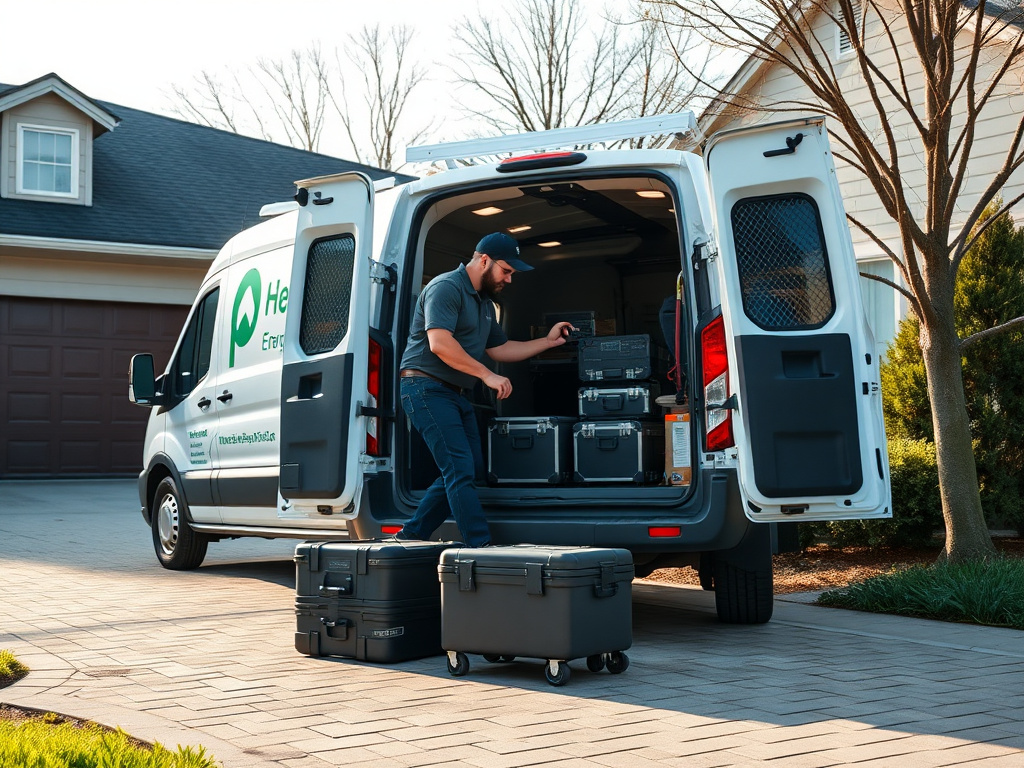
Don't guess. Test. Then get paid to fix it. That's the entire premise EnergyHome Performance is built around — every recommendation we make starts with an instrument reading, not a hunch, because that's the only kind of evidence that gets a tax credit or rebate application approved.
Our Philosophy
Evidence Over Opinion
Home performance contracting has a guesswork problem. Homeowners get told their attic "probably needs more insulation" or their house "feels drafty," and they write a check based on a feeling rather than a fact. We built EnergyHome Performance to close that gap between opinion and evidence — every visit starts with instrumented testing, not a walkthrough with a clipboard.
That means a blower door test that produces an actual ACH50 number, a thermal camera that shows exactly where the building envelope is failing, a duct blaster that quantifies leakage in CFM25, and a combustion safety analyzer that confirms your home is safe to seal tighter. The result isn't a vague punch list — it's a prioritized, ROI-ranked set of recommendations tied to the specific rebate or tax credit program each one qualifies for.
We call this the diagnostics-first approach, and it's the entire reason this company exists: measure first, maximize every rebate dollar.
That philosophy shapes more than our marketing — it shapes how we train our technicians, how we write a report, and how we talk to homeowners on-site. If a finding can't be traced back to an instrument reading, it doesn't go in your report as a firm recommendation. It gets flagged as something worth investigating further instead.
Why It Matters
Why Data-Driven Diagnostics Matter for Your Home
Home performance work is expensive enough without paying for the wrong fix. A homeowner who guesses that their attic needs more insulation might spend thousands of dollars adding depth to insulation that was never the actual problem, while the real source of heat loss — an unsealed rim joist, a bypass around a recessed light fixture, a gap behind a knee wall — goes untouched. Diagnostic testing exists to prevent exactly that kind of expensive misdiagnosis.
When we run a blower door test, we're not confirming a suspicion — we're generating a number that tells us precisely how much air your home is losing and, paired with a thermal camera, exactly where. That data lets us build a recommendation list ranked by actual impact instead of guesswork, so the dollars you spend on upgrades go toward the improvements that will move your numbers the most.
It also protects you on the other end of the process. A vague verbal assessment doesn't hold up when you're trying to document a tax credit or a utility rebate application — a certified instrument reading does. Diagnostics-first isn't just a technical preference for us; it's what keeps your investment accountable, both to your energy bill and to whichever program you're trying to qualify for.
Our Methodology
Test. Number. Money. Verify.
Every engagement follows the same four-step diagnostic sequence, regardless of which service you start with.
Instrument-based baseline testing — blower door, thermal imaging, duct blaster, combustion safety analyzer — depending on your goals.
Certified performance metrics: ACH50, HERS Index, CFM25, and thermal delta-T, documented in a formal report.
We map your exact numbers to the federal tax credits and utility rebate programs that require them as proof.
Post-retrofit re-testing confirms the upgrade worked and documents the before/after improvement for your records.
Our Core Value Proposition
The Audit-to-Rebate Pipeline
A diagnostic audit is valuable on its own, but the real payoff for most homeowners is what happens after the report is delivered. Programs like the federal Section 25C Energy Efficient Home Improvement Credit, and rebate programs like HOMES and HEEHRA, don't take a homeowner's word for it that a house needed air sealing or new insulation — they require documented, measured evidence tied to specific performance thresholds. That evidence has to come from somewhere, and it has to be produced using accepted testing protocols.
We built our audit-to-rebate pipeline around that requirement. Every test we run is documented in a format that doubles as program-ready evidence — your ACH50 score, your HERS-adjacent scoring, your duct leakage percentage, all captured the way a reviewing program expects to see them. Instead of handing you a checklist and leaving the paperwork to you, we treat the audit report itself as the first step of your rebate application, not a separate deliverable you have to assemble on your own.
That's the core of our value proposition: we don't just tell you what's wrong with your home, we generate the specific documentation that turns those findings into dollars — whether that's a federal tax credit, a utility rebate, or a state-level incentive program stacked on top of both.
Certifications & Standards We Hold
BPI Certified
Building Performance Institute standards govern our whole-home diagnostic audit protocol.
RESNET / HERS
RESNET-aligned procedures for HERS Index scoring on existing homes and new construction.
ENERGY STAR Partner
Testing protocols that support ENERGY STAR verification pathways for qualifying homes.
ASHRAE 62.2 Ventilation
Ventilation calculations applied whenever a home is sealed tighter, to keep indoor air safe.
Our Diagnostic Toolkit
The Instruments Behind Every Number
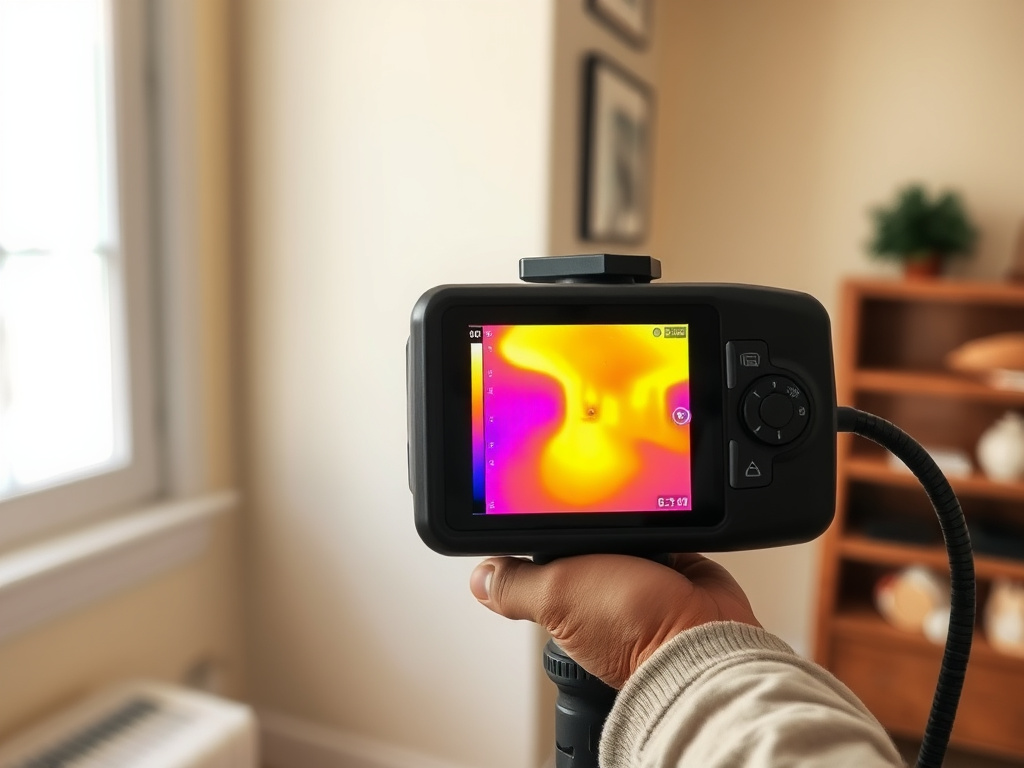
A calibrated blower door and digital manometer depressurize your home to a standardized 50 Pascals so we can measure exactly how much air is moving through gaps in the building envelope — that reading becomes your ACH50 score. An infrared thermal camera turns temperature differences into a visual map, showing precisely where insulation is missing, compressed, or bypassed, especially once the blower door is running and leaks are actively pulling in outside air.
For homes with ductwork, a duct blaster isolates the duct system and measures leakage directly, producing the CFM25 number that duct-sealing rebate programs often require. And because tightening a home changes how combustion appliances draft, a combustion safety analyzer checks carbon monoxide levels, gas line integrity, and worst-case depressurization scenarios before we ever recommend sealing work.
What Sets Us Apart
Not a Walkthrough. A Diagnostic Process.
Plenty of companies in this industry offer some version of a home energy inspection, and most of them follow the same basic pattern: a technician walks through your house, looks at your attic hatch, feels around a few windows for drafts, and hands you a generic checklist recommending more insulation or new windows. It's fast, it's often marketed as free, and it produces exactly zero measured data. No instrument touches your house, no number gets generated, and the resulting checklist looks nearly identical from one house to the next regardless of what's actually happening inside the walls.
Our process starts from a different premise. Every visit begins with the assumption that we don't actually know what's wrong with your home until an instrument tells us — so we depressurize the building envelope, scan it with an infrared camera, and test the mechanical systems before we write a single recommendation. The result is a report that looks different for every home we test, because it's built from that specific home's numbers rather than a generic template. We're not selling you insulation or air sealing; we're selling you the data that tells you whether you need it, and how much.
None of this means we ignore comfort, health, or safety outcomes — combustion safety testing, moisture diagnostics, and ventilation calculations stay firmly in scope as diagnostic categories. It just means the framing device throughout is always the test and the number first, with comfort and safety improvements arriving as the natural result of chasing accurate data, not the other way around.
Where We Work
Our Service Area
We provide instrument-based diagnostic testing to homeowners across a multi-state service area, working with single-family homes, new construction projects, and multifamily buildings alike. Because every visit is scheduled individually, the fastest way to confirm availability where you live is to reach out directly — call us at 844-967-5247 and our scheduling team will confirm service availability and the next appointment window for your location.
If you're coordinating a diagnostic audit as part of a larger project — new construction verification, a multifamily assessment, or a time-sensitive rebate deadline — mention that context when you reach out at josh@contractorschoiceagency.com so we can route your request to the right team from the start.
Explore Our Diagnostic Services
A few of the instrument-based tests and assessments behind every EnergyHome Performance report.
Whole-Home Energy Audits
BPI-standard diagnostic-grade audits
BBlower Door Testing
Air leakage measured as an ACH50 score
TThermal Imaging
Infrared scans reveal hidden thermal loss
HHERS Ratings
Official home energy scoring
IInsulation & Air Sealing Assessment
R-value verification and bypass diagnostics
UUtility Rebates & Tax Credits
25C, HOMES, HEEHRA, and utility programs
Ready to Get Your Numbers?
Book a diagnostic-grade energy audit and get a certified, ROI-ranked action plan built from real instrument data.