Air Leakage Diagnostics
Blower Door Testing & Air Leakage Diagnostics
A blower door test does not estimate how leaky your home is — it measures it. A calibrated fan depressurizes the entire structure to a standardized pressure and records exactly how much air is moving through every crack, gap, and penetration to compensate. The result is a single, repeatable number, ACH50, that tells you precisely where your home stands and which air-sealing rebate dollars you can go after.
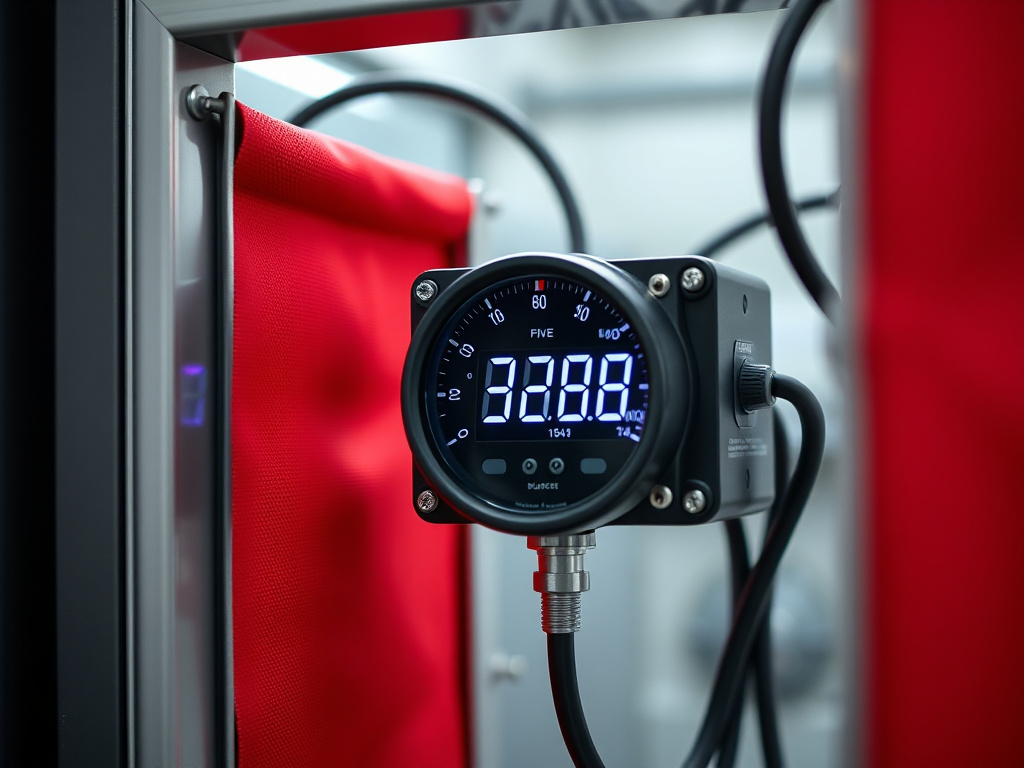
What Number This Test Produces
ACH50
Air changes per hour at 50 Pascals — the industry air-leakage benchmark
Which Rebate This Unlocks
Air-Sealing Rebate Eligibility
Utility and 25C air-sealing incentives require a documented pre/post ACH50 score
How It Works
Depressurizing Your Home to 50 Pascals
We mount a calibrated fan and frame directly into an exterior doorway, sealing around the edges so all of the airflow we generate is accounted for. The fan then depressurizes the entire house to a standardized 50 Pascals relative to the outside — roughly the pressure a 20 mph wind exerts on every side of a building at once. As outside air rushes in through every crack, gap, and penetration in the envelope to equalize that pressure difference, a digital manometer reads exactly how much air the fan has to move to hold the house at 50 Pascals. That airflow figure, expressed as cubic feet per minute, is converted into air changes per hour and reported as your ACH50 score.
The reason this specific procedure matters is standardization. Every home tested this way is tested under the identical 50-Pascal condition, which means your ACH50 score is directly comparable to any other home tested the same way, on any day, by any certified technician. That consistency is exactly why rebate programs and building codes accept a blower door number as objective proof rather than a subjective description of how drafty a house feels.
Benchmarks
What Counts as "Good," "Average," and "Leaky"
ACH50 targets shift with construction era and the energy code that was active when the home was built. An older home posting a higher number is not automatically a failing grade — but knowing exactly where your score sits relative to homes of a similar age and size tells you how much room for improvement, and how many rebate dollars, are realistically on the table.
| Item | Good | Average | Leaky |
|---|---|---|---|
| Pre-1980 construction | < 7.0 | 7.0 – 14.0 | 14.0+ |
| 1980 – 2010 construction | < 5.0 | 5.0 – 9.0 | 9.0+ |
| Modern code-built (2010+) | < 3.0 | 3.0 – 5.0 | 5.0+ |
Ranges shown are general diagnostic guidance, not a code requirement — your technician will explain the specific target relevant to your jurisdiction and rebate program.
Pricing
Standalone Test Pricing vs. Bundled-Into-Audit Pricing
A blower door test can be booked two ways. As a standalone test, it is priced independently and makes sense when you already know exactly what you need — verifying a specific program requirement, checking a number before signing a contract, or confirming that recent sealing work actually changed anything. Bundled into a full diagnostic audit alongside thermal imaging, duct testing, and combustion safety, the blower door portion typically costs less per test than booking it alone, because the crew is already on site with the rig staged and set up. Most homeowners who have not had any diagnostic testing done yet come out ahead by bundling, since a standalone ACH50 number alone will not tell you where the leakage is actually coming from — only that it exists.
Price for either option scales with home size and how accessible the exterior door frame is for rigging the fan. Multifamily units and homes with unusual door configurations are quoted individually.
If your only goal is meeting a specific requirement — a lender asking for a current ACH50 figure, or a rebate program that needs a fresh test on file — a standalone booking gets you that single number quickly. If you have not had any diagnostic testing on the house and are not sure where energy loss is coming from, the full audit is almost always the better value, since it answers the leakage question and several others in the same visit.
What to Expect
What a Blower Door Visit Looks Like
A standalone blower door test usually takes thirty to sixty minutes on site, longer if it is part of a full audit with other instruments running at the same time. Before the fan goes up we walk the house to note anything that could skew the reading — an open fireplace damper, an active exhaust fan, or interior doors that are normally closed. Those get set to a standard configuration so the test measures the envelope itself, not a temporary condition. The rig then goes into the most practical exterior doorway, typically the front or a side entry, and stays in place for the duration of the test.
While the fan is running, we often walk the interior with a smoke pencil or the infrared camera to physically locate where the measured air is entering — rim joists, can lights, attic hatches, and plumbing penetrations are common culprits. That combination of a hard number plus a physical location for the leakage is what turns an ACH50 score into an actionable sealing plan rather than just a diagnostic statistic.
Common Questions About the Number
Why a Result Might Come Back Higher or Lower Than Expected
Weather conditions, a strong wind on test day, an open damper, or a bathroom fan left running can all shift a reading by a meaningful margin. Certified technicians control for the variables they can — closing interior doors to a standard configuration, checking dampers and exhaust fans, and noting outdoor wind speed at the time of the test — but if a result looks significantly different from what you expected based on the age or condition of the house, that is worth a conversation before you act on it. In some cases a second test on a calmer day is the right call, particularly if the first reading is being used to support a rebate application where accuracy matters.
Why the Number Controls Eligibility
How Your ACH50 Score Ties to Air-Sealing Rebate Eligibility
Air-sealing rebate programs and the federal 25C tax credit do not take a contractor's word that a house got tighter — they require a documented, instrument-measured before-and- after comparison. That means the blower door test is not just diagnostic; it is the paperwork. A baseline test establishes your starting ACH50 before any sealing work begins. After the work is complete, a re-test on the same equipment, using the identical 50-Pascal standard, produces the final number that proves the improvement — and the size of that improvement is frequently what determines which rebate tier you qualify for.
This is also why a self-reported estimate of "we sealed most of the obvious gaps" never satisfies a program administrator. A rebate application built on a measured percentage improvement in ACH50 is a fundamentally stronger claim than one built on a contractor's description of the work performed, and it is far less likely to be flagged for additional documentation.
Before and After
Pre- and Post-Retrofit Re-Testing to Prove the Sealing Worked
The most valuable blower door test most homeowners never book is the second one. A pre-retrofit baseline test tells you where you are starting from and gives your air-sealing contractor a number to work against. Once the sealing work is complete, a post-retrofit re-test — run on the same equipment, to the same 50-Pascal standard, ideally by the same technician — produces the documented improvement figure that both proves the work was effective and satisfies the before-and-after requirement most rebate programs impose. Without that second test, you have no way to confirm the sealing crew actually reduced leakage rather than simply performed work that looked productive.
Re-testing also protects you against paying for sealing work that underperformed. If the post-retrofit ACH50 barely moves from the baseline, that is a signal worth investigating before you sign off on the job — not something you would ever discover from a visual inspection alone.
We recommend scheduling the post-retrofit test as its own line item when you request an air-sealing quote from any contractor, rather than assuming it is automatically included. Some crews build re-testing into their standard process; others treat it as an add-on. Either way, walking into the project with a documented plan for both tests keeps the whole job aligned with what a rebate application will eventually require.
Related Diagnostics
Get Your ACH50 Score
Book a blower door test standalone or as part of a full diagnostic audit — either way, you'll walk away with a certified, comparable number.