Diagnostic Service
Combustion Safety & Indoor Air Quality Diagnostics
Sealing a house tighter changes how it breathes. Before we call any air-sealing project finished, we test whether your combustion appliances can still draft safely under real-world conditions — because a tighter house that backdrafts is a hazard, not an upgrade.
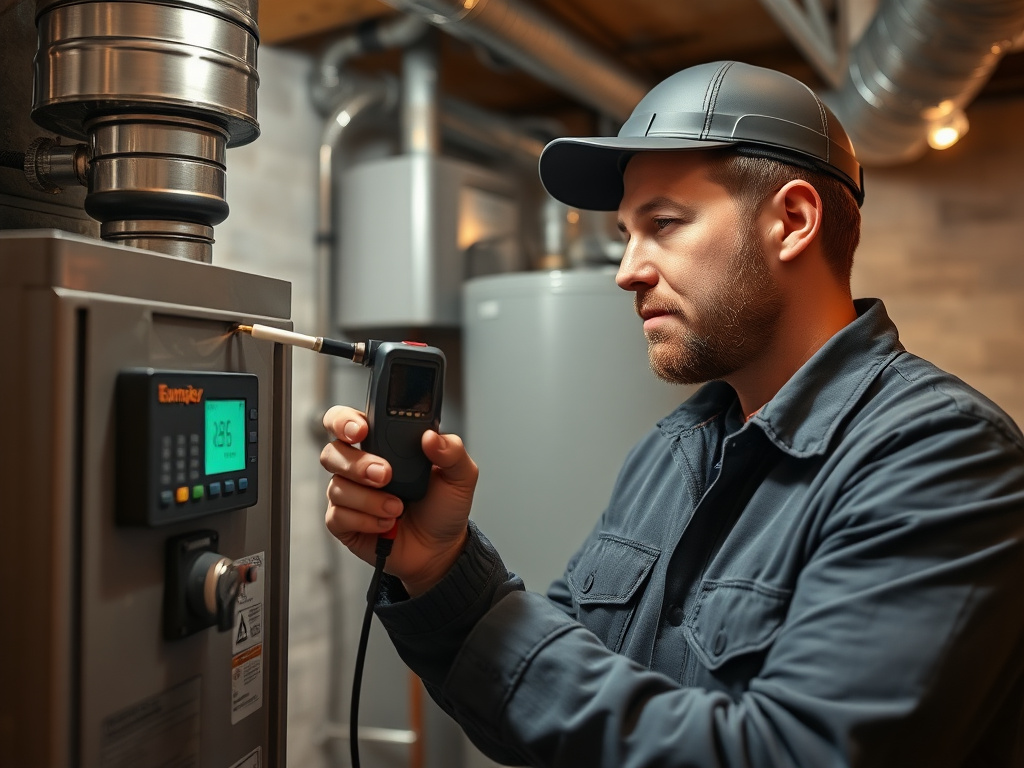
What Number This Test Produces
CAZ Depressurization / CO ppm
Worst-case combustion appliance zone testing and carbon monoxide readings
Which Rebate This Unlocks
Required Safety Sign-Off for Sealing Work
Air-sealing rebate programs require documented combustion safety clearance
Why Tightening a House Requires Combustion Safety Testing
Older, leakier homes rarely put a strain on combustion appliances. Enough outside air moves through gaps around windows, rim joists, and attic penetrations that a furnace, water heater, or fireplace almost never has to compete for the air it needs to draft properly. Once that leakage is closed up — weatherstripping added, top plates sealed, chases and can lights air-sealed — the passive air supply those appliances quietly depended on can disappear along with it.
When a combustion appliance can't draw enough makeup air, it can backdraft: instead of pulling exhaust up and out through the flue, the appliance pushes combustion byproducts, including carbon monoxide, back into the living space. This is the single most important safety check that gets skipped when air sealing is treated purely as an efficiency project. We treat combustion safety testing as a mandatory bookend to every sealing job — run before work begins to establish a baseline, and again after sealing is complete to confirm the finished house still breathes safely.
This is also why we never sign off on an air-sealing scope in isolation. A blower door number alone tells you how tight the envelope became — it says nothing about whether the appliances inside that envelope can still operate safely. Pairing the two tests is the only way to know both halves of the story.
Worst-Case Depressurization Testing, Step by Step
The procedure is designed to recreate the most air-starved condition a house could reasonably hit during normal life, then confirm every combustion appliance still performs safely under that stress.
Baseline Conditions
- House state
- Doors and windows closed
- Exhaust devices
- All running simultaneously
- Air handler
- Running on call for heat
- Reference pressure
- Recorded before test
Pass / Fail Thresholds
- CAZ depressurization
- Within appliance-rated limit
- Spillage at flue
- None after 1 minute
- Ambient CO
- Below action level
- Draft pressure
- Positive, sustained
We start by recording baseline combustion appliance zone (CAZ) pressure with the house in its normal operating state. Then every exhaust device that could pull air out of the house — bath fans, range hood, clothes dryer, and the central air handler — is switched on at once, and we re-measure CAZ pressure to see how far it swings negative. With the house held at that worst-case depressurization, each combustion appliance is fired and monitored with a smoke pencil and digital manometer to confirm the flue is still drafting outward instead of spilling exhaust back into the room.
Carbon Monoxide, Gas Leak & Appliance Draft Testing
Beyond the worst-case scenario, we take direct readings at the source. Every combustion appliance in the home — furnace, boiler, water heater, range, and any fireplace or fixed space heater — is checked individually for ambient carbon monoxide and spillage under both normal and depressurized conditions. Readings are taken at the draft hood, not just in the room air, so a marginal appliance doesn't get missed because the room happens to be well ventilated that day.
We also inspect every accessible gas line fitting — shutoff valves, union connections, and appliance connectors — for leaks, and verify draft strength at each flue connection to confirm exhaust gases are moving in the right direction at the right rate. Any appliance that fails a draft or spillage check is flagged immediately, with the specific reading and location documented in the report, before any sealing work is allowed to proceed further.
CO & Spillage
Ambient carbon monoxide readings and spillage checks at every combustion appliance.
Gas Leak Checks
Accessible gas fittings tested at appliances, shutoffs, and connectors.
Draft Verification
Flue draft confirmed under both normal and worst-case depressurized conditions.
ASHRAE 62.2 Ventilation Calculations for a Newly Sealed Home
A tighter envelope doesn't just change how combustion appliances draft — it changes how fresh air moves through the entire house. Once your envelope reaches a lower ACH50 number, the incidental infiltration that used to dilute indoor pollutants, moisture, and odors is substantially reduced. We calculate whether your home's post-sealing airtightness falls below the mechanical ventilation rate ASHRAE 62.2 recommends for a home of its size and occupancy.
If the calculation shows a shortfall, we specify exactly what closes the gap — that might be as simple as a timer or humidity control upgrade on an existing bath fan, or it might call for a dedicated fresh-air duct or an energy recovery ventilator (ERV) sized to the home's calculated requirement. The goal of every sealing project we scope is a house that's tight enough to be efficient and ventilated enough to stay healthy — not one traded for the other.
Turning a Hazard Into a Documented Pass
Every combustion safety report we issue documents pre- and post-sealing conditions side by side, giving you and your contractor a clear paper trail proving the finished work made the home safer, not riskier. If a test reveals a marginal or failing appliance, we flag it before sealing work proceeds, not after the crew has already packed up and the house is closed in.
That sequencing is non-negotiable in how we schedule work: air sealing and combustion safety testing happen together, never sealing first with a safety check added later as an afterthought. A house that trades a lower energy bill for an unmonitored hazard isn't a successful retrofit — the whole point of instrument-based testing is proving both outcomes at once: a lower ACH50 number and a clean combustion safety pass, documented in the same visit.
Combustion Safety & IAQ FAQs
Will air sealing my house cause indoor air quality or combustion safety problems?+
It can, if the sealing work isn't paired with combustion safety testing. Tightening a home's envelope removes the incidental air leakage that furnaces, water heaters, and fireplaces have quietly relied on for makeup air and draft. Without a worst-case depressurization test run before and after sealing, a tightened house can begin backdrafting flue gases into living space instead of venting them outside. That's exactly why every air-sealing project we scope includes combustion safety testing as a mandatory bookend, not an optional add-on.
What is worst-case depressurization testing?+
It's a controlled test where we run every exhaust device that could pull air out of the house at the same time — bath fans, kitchen exhaust, the clothes dryer, and the central air handler — while a technician monitors whether each combustion appliance still drafts correctly or starts spilling flue gases back into the home. It simulates the most air-starved condition your house could plausibly reach during normal daily use, not a theoretical extreme.
Do you test for carbon monoxide during a combustion safety inspection?+
Yes. We measure ambient carbon monoxide levels and spillage at every combustion appliance under both normal and worst-case depressurization conditions, check accessible gas fittings for leaks, and verify draft strength at each flue connection. Every reading is logged against the appliance it came from, so the finished report shows exactly which unit passed, which needs attention, and why.
Is combustion safety testing required for rebate programs?+
Many air-sealing rebate programs, including HEEHRA-funded weatherization work, require documented combustion safety results before or immediately after sealing work is approved for reimbursement. Our report is formatted to satisfy that documentation requirement directly, with pre- and post-sealing readings shown side by side.
Related Diagnostics
Combustion safety testing is one part of a full diagnostic picture.
Whole-Home Energy Audits
BPI-standard diagnostic-grade audits
BBlower Door Testing
Air leakage measured as an ACH50 score
TThermal Imaging
Infrared scans reveal hidden thermal loss
HHERS Ratings
Official home energy scoring
IInsulation & Air Sealing Assessment
R-value verification and bypass diagnostics
UUtility Rebates & Tax Credits
25C, HOMES, HEEHRA, and utility programs
NNew Construction Verification
Duct blaster and code-compliance testing
MMultifamily & Commercial Assessments
Scaled diagnostics for larger buildings
Sealing Your Home? Test It Safely.
Book combustion safety testing alongside your air-sealing project and get documented proof your home is both efficient and safe.