A note on this case study: every figure below is a composite, illustrative example assembled from the range of outcomes typical of diagnostic-driven retrofits on homes of similar age, size, and construction — it is not a single named customer's file, and no real address, homeowner, or project record is being described. We're presenting the math this way intentionally, so the calculations are transparent and reproducible rather than resting on an unverifiable testimonial. Your own home's starting numbers, upgrade scope, and results will differ.
Most retrofit “case studies” homeowners find online are vague on purpose — a sentence about improved comfort, a vague reference to “lower bills,” and no numbers a skeptical reader could actually check. That's not useful when you're trying to decide whether a diagnostic-driven retrofit is worth the cost on your own house. So this walkthrough does the opposite: starting diagnostic scores, the exact upgrade scope those scores justified, the post-retrofit re-test results, and a full accounting of where every dollar went — out of pocket, and back via rebates and tax credits.
The point isn't that your project will produce these exact numbers. It's to show, end to end, how a diagnostic-first process turns a stack of test results into a sequenced scope of work, and how that same documentation is what makes the rebate and credit dollars collectible in the first place rather than theoretical.
The Starting Point
The home in this example is a two-story, 2,400-square-foot house built in 1998 — squarely in the construction era where builders met code-minimum insulation requirements but air sealing was not yet treated as a standard, verified practice. A whole-home diagnostic audit — blower door test, thermal imaging, duct blaster testing, and a combustion safety check — produced the following baseline.
- ACH50: 11.2 — well above the under-7 range generally considered reasonably tight for a home of this age, and consistent with meaningful, correctable envelope leakage rather than a handful of isolated gaps.
- HERS Index: 118 — worse than the standard new-construction reference score of 100, meaning the home was modeled to use roughly 18% more energy than a home built exactly to the 2006 code baseline.
- Duct leakage to outside (CFM25): 142 CFM, or about 18% of total system airflow — a meaningful share of conditioned air was leaving the ducts before ever reaching a supply register.
- Thermal imaging findings: significant heat loss at the attic hatch, recessed can lights, and the rim joist band around the foundation perimeter, plus two exterior wall bays showing compressed or missing insulation.
- Combustion safety: passed at baseline, but flagged for a mandatory re-test after air sealing given the scope of planned work — tightening a home's envelope changes how fuel-burning appliances draft.
None of these five findings were surprising in isolation for a house of this age. What made the report useful wasn't any single number — it was having all five in the same document, which is what let the auditor rank the upgrade scope by expected impact instead of handing over a generic “add more insulation” recommendation.
The Diagnostic-Driven Upgrade Scope
Instead of a flat checklist, the audit report ranked the recommended work by expected ACH50 and HERS impact relative to cost, using the specific leakage and thermal findings collected during the visit rather than generic assumptions about a house this age. The contractor executed the scope in this sequence:
- Air sealing first — targeting the attic hatch, top plates, can lights, and rim joist gaps identified by the thermal scan, since sealing before insulating is what lets the insulation upgrade perform as modeled rather than sitting on top of active air leaks.
- Duct sealing at accessible supply and return connections flagged by the duct blaster test, addressing the 18%-to-outside leakage figure directly.
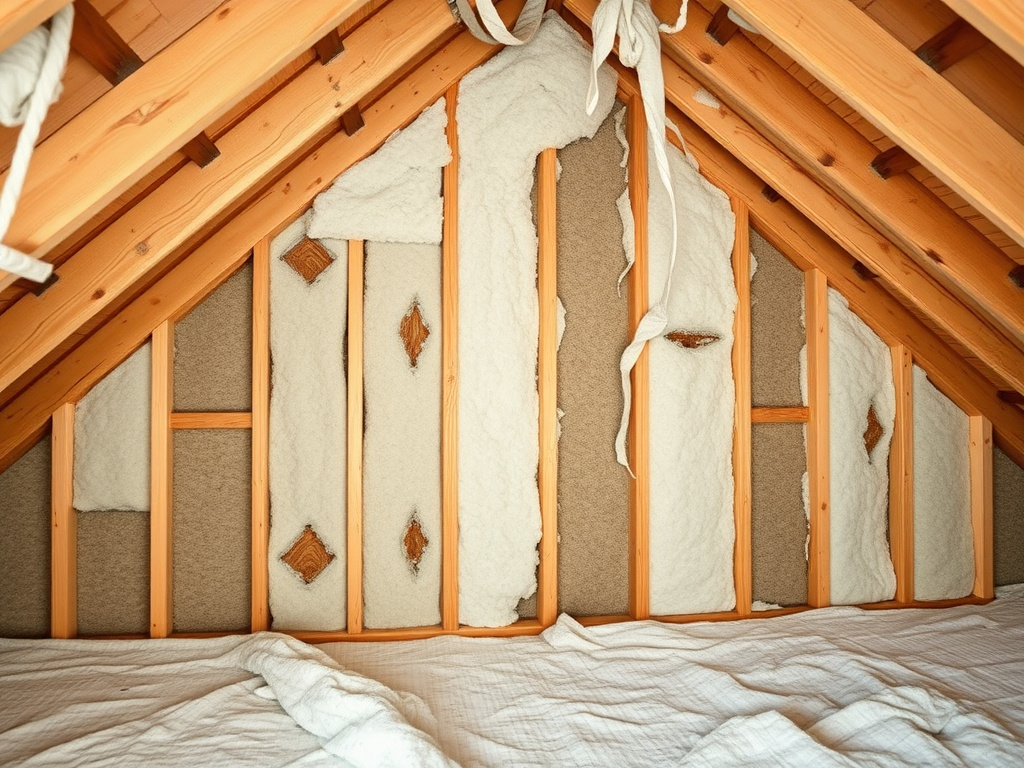
- Attic insulation top-up from an existing R-19 to R-49 in the two under-insulated bays the thermal camera identified, rather than a blanket re-insulation of the entire attic.
- Combustion safety re-test, performed after air sealing was complete, confirming no backdrafting risk had been introduced by the tightened envelope before the project was considered closed.
Notice what's absent from this scope: a full attic re-insulation, new windows, or HVAC equipment replacement. None of those were indicated by the diagnostic data, and skipping them kept the total project cost well below what a generic “whole-home efficiency package” sales pitch might have included. This is the practical value of a diagnostic-first approach — the audit doesn't just find problems, it also tells you what doesn't need to be touched.
Post-Retrofit Re-Test Results
A post-retrofit blower door and duct blaster re-test — same instruments, same protocol, same auditor — produced the documented before/after comparison required for both the contractor's workmanship verification and the rebate application itself.
| Metric | Before | After |
|---|---|---|
| ACH50 (blower door air leakage) | 11.2 | 4.8 |
| HERS Index | 118 | 71 |
| Estimated annual utility bill | $3,140 | $1,890 |
| Rebate & tax-credit dollars captured | $0 | $2,050 |
The ACH50 improvement — from 11.2 down to 4.8 — is a 57% reduction in total envelope air leakage, moving the home from the “average-to-leaky” range for its era into the “good” range. The 21-point drop in HERS Index, calculated from the updated envelope, duct, and air-leakage data together, reflects the combined effect of the air sealing, duct sealing, and insulation work rather than any single measure in isolation — which is exactly why HERS Index is the number most rebate programs use to size their payout instead of any one component figure.
The Actual Utility Bill Delta
Estimated annual energy cost dropped from roughly $3,140 to $1,890 — a savings of about $1,250 per year, or just over $100 per month. That figure was derived by comparing twelve months of pre-retrofit utility billing data against twelve months of post-retrofit billing, weather-normalized to account for the fact that heating and cooling degree-days rarely match exactly year over year. Weather normalization matters here: without it, a mild winter following a harsh one could make a retrofit look far more effective than it actually was, or the reverse.
It's worth being direct about what this figure does and doesn't include. It reflects heating and cooling energy use tied to the envelope and duct improvements; it does not assume any change in occupant behavior, thermostat setpoints, or appliance usage, since crediting the retrofit for savings that actually came from a household turning the thermostat down would overstate the real result. Isolating the envelope effect this way is also what makes the number defensible as documentation, rather than an estimate that falls apart under a second look.
Rebate & Tax Credit Dollars Captured vs. Out-of-Pocket Cost
Total project cost for the air sealing, duct sealing, and attic insulation top-up in this example came to $6,400. Because the audit report documented the exact ACH50 improvement and the specific R-value increase, rather than a general description of “insulation work performed,” the homeowner was able to claim two separate incentives against that cost:
- $1,200 via the federal Section 25C Energy Efficient Home Improvement Credit, claimed under the insulation and air-sealing category using the contractor invoice and the audit's documented R-value increase.
- $850 via a local utility weatherization rebate, calculated directly from the documented pre- and post-retrofit ACH50 improvement rather than a flat per-project amount — the specific 57% reduction is what determined the rebate tier.
That's $2,050 in combined incentive dollars against a $6,400 project cost, bringing effective out-of-pocket cost down to $4,350 — roughly a 32% reduction in what the homeowner actually paid. Neither incentive would have been reachable without the audit's before/after data: the utility rebate in particular was sized directly from the ACH50 delta, meaning the pre-retrofit test wasn't optional paperwork, it was the baseline the entire rebate calculation depended on.
Payback Timeline
Against $4,350 in effective out-of-pocket cost and $1,250 in annual energy savings, the simple payback period works out to 4,350 ÷ 1,250 — a little under 3.5 years. Every year after that is savings with no further offsetting cost, and the envelope and duct improvements themselves don't degrade the way mechanical equipment does, so the annual savings figure should hold reasonably steady rather than decline over time barring some other change to the home.
It's useful to compare that payback period against the alternative of not claiming the rebate and credit dollars at all. Measured against the full $6,400 project cost with no incentives applied, payback stretches to just over five years — still a reasonable return for envelope work, but a meaningfully longer wait, and a clear illustration of why the documentation effort behind the rebate applications is worth the time it takes. In this example, roughly two years of the payback timeline were effectively erased by incentive dollars that existed only because the audit produced verifiable before/after numbers.
Why the Order of Operations Mattered
Air sealing happened before the attic insulation top-up, and the combustion safety check was re-run after sealing rather than only performed at baseline. Both sequencing decisions were deliberate, not incidental. Sealing before insulating matters because insulation only performs at its rated R-value in a properly air-sealed cavity — insulating over active air leaks routinely underperforms its modeled savings, which would have understated the eventual HERS improvement and put the utility rebate tier at risk. Re-testing combustion safety after sealing, rather than trusting the baseline pass, is what actually confirmed no new backdrafting risk had been introduced by the tightened envelope — an assumption, however reasonable, isn't the same as a verified result.
This is the broader takeaway this composite example is meant to illustrate: the dollar figures above — the $2,050 in combined incentives, the 3.5-year payback, the $1,250 in annual savings — aren't the product of doing more work or spending more money than a generic retrofit. They're the product of sequencing a smaller, targeted scope of work in the order the diagnostic data actually justified, and then documenting the result well enough that a rebate reviewer didn't have to take anyone's word for it.